Tony Kuyper Photography
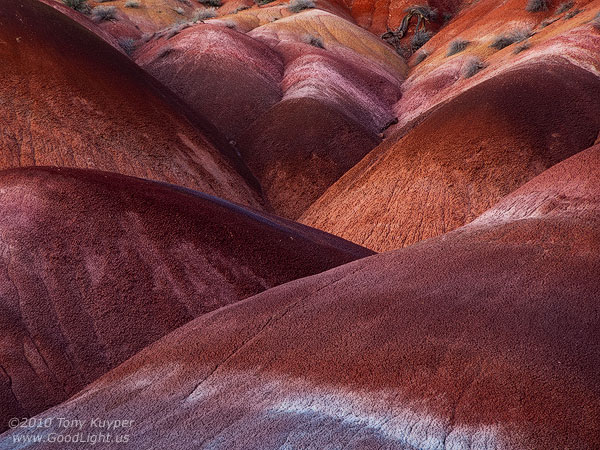
Bentonite Blossom
These clay hills are the upper layers of the Chinle formation, sediments from lakes and streams that were deposited 200 million years ago. The colors likely came much later as chemical-bearing water seeped down from the layers above. Lower down, erosion tends to carve deep fissures into the soft sediments. At the top of the layer, however, the water isn't moving as fast resulting in rounder, gentler slopes and shapes.